


Key Takeaways
- It is mandatory for VoIP providers to support landline number portability.
- Landline number porting lets you keep your original phone number.
- Keep your existing landline active during the number porting process.
- Submit the LOA, the latest bill, and the CSR for a smooth transfer.
- Verify local portability and any port freezes before switching.
- Choose a VoIP provider supporting LNP and UCaaS features.
- Prepare a go-live test plan for inbound and outbound calls.
Legacy phone systems are no longer reliable for stress-free business calling. As modern communication technologies mature, traditional landlines are increasingly being replaced. What was once the default for telephony is now being phased out.
No one wants entangled infrastructure. Over two-thirds of UK landlines are already on VoIP, and the total fixed-originated call minutes dropped 23.5% YoY to 3.90B minutes in Q1 2025. Moreover, U.S. incumbents are releasing frequent orders to discontinue copper services.
So, planning a clean port makes sense! This guide shows how to port your landline to VoIP, what to prepare, and how to cut over cleanly.
What is Landline Number Porting?
Landline number porting (Local Number Portability, LNP) is the regulated process of moving your existing telephone number from a traditional wireline carrier to a new provider (including interconnected VoIP) without changing the number.
It works across wireline, IP/VoIP, and even wireless providers within the same local area, subject to local rules and rate-center constraints.
- It’s a federally protected right: Telecommunications Act (47 U.S.C. §251(b)(2)) and 47 CFR Part 52 (Subpart C) (FCC).
- VoIP: FCC rules obligate interconnected VoIP providers to follow LNP requirements.
- Active enforcement in 2025: The FCC reiterated in September 2025 that providers must facilitate porting without unreasonable delay or barriers.
How to Port Landline to VoIP?
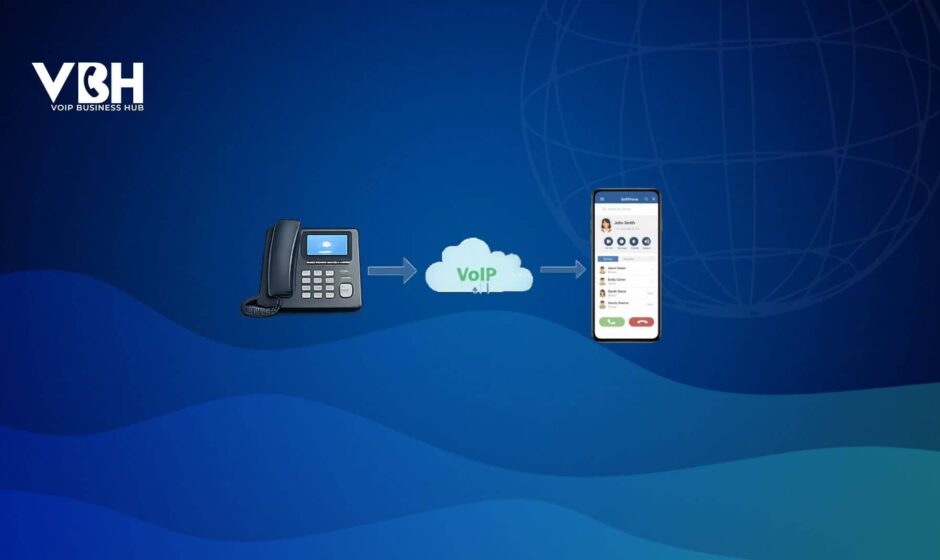
Porting a business landline to VoIP means moving your existing number to an internet-based provider (like a VoIP softphone) without changing what customers dial. Look for a provider that offers multiple communication features within one app, competitive pricing, and customer support tailored to your needs and business profile.
5 Easy Steps to Switch From Landline to VoIP
Ask your new VoIP provider to port your number, keep the old line active, submit the LOA + latest bill, schedule the cutover, pre-configure VoIP, then test and close out.
Step 1: Check if you can port your existing landline number
Ask your prospective provider to confirm local portability and that there’s no port freeze or lock on the account. Keep the current line active, as disconnecting early can leave the number stranded, and as the FCC suggests, not doing so.
If your broadband uses the same copper pair, plan a “dry loop” or use an alternate internet connection first. List any dependencies before the landline to VoIP move. It can include fax, alarms, elevators, intercoms, or POS lines.
Decide whether you want to shift them to eFax, cellular out-of-band, or stay on a specialty line. Match account details precisely to avoid rejection. For multi-site businesses, verify each location’s rate center and note any numbers that must remain local for caller trust.
Step 2: Choose a VoIP provider that supports number porting
Pick a provider that supports LNP for VoIP and also follows federal laws. Check for UCaaS features (white-labeling, auto provisioning) and other capabilities (in-call features, CRM integrations) before you choose your softphone provider.
You are likely to get a dedicated manager who handles the backend and landline to VoIP porting process. Ensure their portal collects the exact fields carriers require, such as LOA, recent bill, BTN/Account number, and (when available) CSR. This helps you avoid standard rejections.
Validate the VoIP platform for regulatory requirements: MLTS 911, CNAM and SMS enablement, STIR/SHAKEN adoption, and robocall-mitigation certifications.
Step 3: Notify your current provider (about your switch to VoIP)
Call your existing carrier provider and check for any pending balances that might delay a landline to VoIP transfer. Do not request disconnection (as the FCC mandates to keep the service active until the transition is complete).
Request the expected FOC (Firm Order Commitment) date/time window so your team can schedule a quiet switch. The FOC is the losing carrier’s confirmation of when they will release the number. Don’t make changes like adding features or address updates mid-process.
Step 4: Submit documents to complete your new porting request
Turn eligibility into an approved order. Your VoIP virtual phone service provider may also require some documents to proceed with transferring your landline number.
- Complete the Letter of Authorization (LOA) using the legal account name and service address, and telephone number exactly as on record.
- Attach the latest phone bill/invoice that shows the required LOA details.
- Providers generally associate a PIN (Personal Identification Number) in the U.S.A. Use it to authorize the number transfer.
- Attach Customer Service Records (CSR) from your previous carrier so that all details match correctly, reducing the chances of rejection.
For toll-free, open a separate RespOrg ticket so local and TFN routes transition in sync with your landline to VoIP schedule. Define “done” in writing: which numbers must ring where, what outbound caller ID to present, and who signs off on acceptance.
Step 5: Pre-configure your new VoIP infrastructure
Build the day-one experience after switching from a traditional phone system to a cloud-based VoIP calling system. Create users, assign extensions, set business hours, ring groups, and IVR prompts, and map a failover route (to mobiles) in case of an outage.
Prepare a short go-live test plan that includes inbound, outbound, IVR tones, voicemail, and a non-emergency 911 verification where allowed. Communicate the timing to staff, share quick reference steps, and designate a floor-walker to resolve first-hour questions.
Step 6: Don’t cancel your landline connection during the process
Keep the losing carrier’s service active until your provider confirms the port is complete. Treat the FOC window as a change-freeze. Once the VoIP softphone is effective, run a short acceptance test. Then, close out legacy services and return any rented hardware.
Your Landline to VoIP Migration Plan
If you sequence the work like this: eligibility check, the right provider, clean paperwork, pre-config, and a disciplined cutover, you can move from landline to VoIP without drama. Lock dates early, freeze changes with the losing carrier, and test what matters.
Keep the old line active until you have verified success, then close out legacy services and document the go-live for ops, finance, and IT. The payoff is control and flexibility on a modern platform, without losing the number that your customers already trust.
FAQs
How long does a landline-to-VoIP port usually take?
You have to follow federal deadlines. “Simple” ports require one business day, and non-simple ports require up to four business days. Providers still coordinate a simple FOC time.
Will porting my landline disrupt my DSL internet?
Yes, if your DSL and voice share the same copper line. Before you port, convert to a stand-alone/dry-loop DSL or move to another broadband service.
Can I port toll-free numbers (800/888) to my VoIP provider?
Yes. Toll-free numbers move through a RespOrg change in the TFNRegistry. Handle this as a separate order from your local numbers and confirm post-cutover routing.
What are common reasons ports get rejected?
Most rejections are due to data mismatches or account status issues: name/address not matching the record, wrong BTN number, missing PIN, open carriers, or a port freeze/lock.
Is VoIP call quality/reliability comparable to landlines for business use?
With business-grade broadband and basic QoS, VoIP can equal or exceed PSTN quality. Wideband HD voice (e.g., G.722) offers clearer audio than legacy narrowband. Reliability depends on power and connectivity, so plan battery backup and verify compliance readiness.